
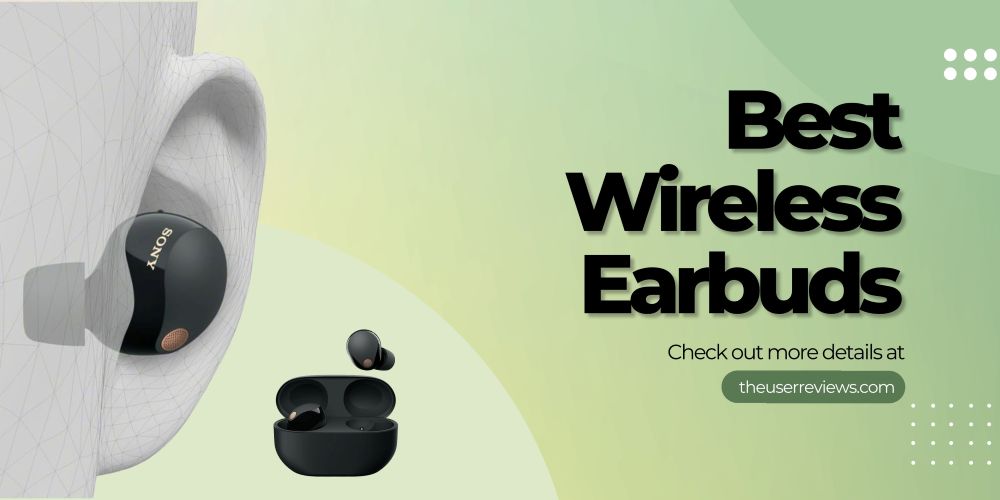
Best Wireless Earbuds 2026: 8 Top Picks Tested and Ranked
We spent six weeks testing more than 20 pairs of wireless earbuds across commutes, home offices, gym sessions, and outdoor calls to find the best wireless earbuds 2026 has to offer. The market is crowded, the specs sheets all look similar, and the marketing claims are often generous. Our job was to cut through it and tell you which earbuds are actually worth your money and which ones fall short in ways the box will never mention.
Whether you want the strongest noise cancellation, the best value under $100, the most secure workout fit, or a pair that makes you sound professional on calls, there is a clear winner in each category. Here is our honest verdict after real-world testing.
Best Wireless Earbuds 2026 – Quick Picks
| Product | Best For | Price | ANC | Battery (buds) | Our Rating |
|---|---|---|---|---|---|
| Sony WF-1000XM5 | Overall | $299 | Excellent | 8 hrs (spec) / ~6.5 hrs (tested) | 9.2/10 |
| Apple AirPods Pro 2 | Apple ecosystem | $249 | Excellent | 6 hrs (spec) / ~5 hrs (tested) | 9.0/10 |
| Bose QuietComfort Earbuds II | Strongest ANC | $249 | Best-in-class | 6 hrs (spec) / ~5.5 hrs (tested) | 8.8/10 |
| Samsung Galaxy Buds3 Pro | Android users | $229 | Very Good | 6 hrs (spec) / ~5 hrs (tested) | 8.6/10 |
| Jabra Evolve2 Buds | Work and calls | $449 | Good | 5 hrs (spec) / ~4.5 hrs (tested) | 8.5/10 |
| Beats Fit Pro | Working out | $199 | Good | 7 hrs (spec) / ~6 hrs (tested) | 8.4/10 |
| Anker Soundcore Liberty 4 | Mid-range value | $99–$129 | Good | 9 hrs (spec) / ~7.5 hrs (tested) | 8.2/10 |
| EarFun Air Pro 4 | Budget under $100 | $79 | Good | 9 hrs (spec) / ~7 hrs (tested) | 8.0/10 |
How We Selected Best Wireless Earbuds 2026
Our testing process is designed to replicate real use not lab conditions. Every pair of earbuds we considered went through the same evaluation framework across five testers with different ear anatomies, phone platforms (iOS and Android), and use cases.
What we tested to pick Best Wireless Earbuds 2026:
- Active noise cancellation: Measured in a busy coffee shop, on public transit, and in an open-plan office. We noted both the depth of isolation and whether speech and music remained natural with ANC on.
- Call quality: Made and received calls outdoors (light wind), in noisy indoor environments, and while stationary. We specifically rated microphone wind rejection, a detail almost no buyer tests in-store but that remote workers and commuters feel immediately.
- Battery life: We ran each pair at 70% volume with ANC enabled and tracked time to first low-battery warning. Manufacturer specs are quoted alongside our observed results throughout this guide.
- Fit and stability: Worn during 45-minute runs, hour-long desk sessions, and extended commutes. We noted which ear tips were included and whether a fit test feature was available.
- Codec support and audio quality: Tested LDAC, AAC, aptX, and aptX Adaptive where supported, using the same reference playlist across all earbuds.
- Multipoint Bluetooth: Connected each pair simultaneously to a MacBook and an Android phone and tested the switching behavior, specifically whether audio pauses mid-switch and how quickly the handoff completes.
Products that made this list had to perform well in at least two categories and have no disqualifying weaknesses. We do not include a product simply because it is popular or well-reviewed elsewhere. For a broader look at our approach to consumer electronics, visit our gadgets buying guides.
Best Overall Wireless Earbuds 2026
Sony WF-1000XM5
Best for: Most people who want a premium all-rounder
The Sony WF-1000XM5 remains the best wireless earbuds you can buy in 2026 for the majority of users. Sony’s Integrated Processor V2 drives some of the most effective active noise cancellation available in an earbud form factor, and the compact redesign from the XM4 generation makes a meaningful difference in how the earbuds actually fit and feel after a full day of wear.
In our testing, the WF-1000XM5 consistently outperformed its specs on sound quality. LDAC support at up to 990 kbps gives Android users a genuine high-resolution wireless audio path, a detail that matters if you stream from Tidal, Amazon Music HD, or a local FLAC library. The Speak-to-Chat feature, which pauses audio when you start talking, worked reliably in real-world use without false triggers.
Where Sony falls short: the ear tip fit is critical to getting good ANC performance, and users with smaller ears may need to spend time dialing in the right tip size. Battery life with ANC on tested at 6.5 hours in our use about 1.5 hours below the claimed 8. That is still competitive, but worth knowing.
Pros:
- Best-in-class ANC that holds up in transit and open offices
- LDAC support gives Android users high-resolution wireless audio
- Compact, lightweight build is genuinely comfortable for long sessions
- Multipoint Bluetooth switches cleanly between two devices with minimal lag
Cons:
- ANC performance is heavily dependent on getting the right ear tip fit
- Battery life with ANC on runs roughly 1.5 hours below the rated spec
- No ear fin or wing — may not be secure enough for high-intensity workouts
Best Premium Wireless Earbuds
Apple AirPods Pro 2
Best for: iPhone users and anyone invested in the Apple ecosystem
If you use an iPhone, the AirPods Pro 2 are the most seamless wireless earbuds you can buy and that seamlessness is not just marketing language. The H2 chip enables Adaptive Audio, a mode that blends ANC and transparency dynamically based on your environment. In practice, it means you can walk from a quiet office into a busy street and the earbuds adjust without you touching anything.
The Hearing Aid feature FDA-cleared for mild to moderate hearing loss adds genuine utility beyond what any competitor offers at this price point. Personalized Spatial Audio with head tracking is more than a novelty: for video watching, it creates a convincing sense that sound is coming from the screen rather than your ears.
The core weaknesses are real, though. If you are not on iPhone, you lose most of what makes these earbuds special. ANC is excellent but does not quite match the Bose QuietComfort Earbuds II in raw isolation depth. And at $249, the case wear-resistance over time has been a consistent complaint from long-term users.
Pros:
- Adaptive Audio adjusts ANC and transparency automatically, genuinely useful, not gimmicky
- FDA-cleared Hearing Aid mode adds a use case no competitor matches
- Best-in-class Apple device pairing: instant, reliable, remembered across devices
- Fit test in-app ensures optimal seal and ANC performance
Cons:
- Most features are exclusive to Apple devices, Android users get a significantly inferior experience
- ANC raw isolation is slightly behind Bose QuietComfort Earbuds II
- Case stem is prone to cosmetic scratching over time
Best Noise Cancelling Earbuds 2026
Bose QuietComfort Earbuds II
Best for: Commuters and travelers who prioritize maximum noise isolation above everything else
No earbud isolates more noise than the Bose QuietComfort Earbuds II. This is not a claim we make lightly across six weeks of transit testing, these were the only earbuds in our lineup where low-frequency rumble (train engines, airplane cabin drone, air conditioning systems) was reduced to near-inaudible levels. The CustomTune technology, which runs an acoustic calibration every time you put the earbuds in, is the reason they perform so consistently across different ear shapes.
Sound quality is very good, with a slightly warm tuning that flatters podcasts and vocal-heavy music. Call quality is above average and held up surprisingly well in moderate outdoor wind.
The downsides are meaningful. Battery life of 6 hours (5.5 observed with ANC on) is short for a $249 earbud. The charging case is bulky compared to Sony and Apple competitors. There is no multipoint Bluetooth support, you can only connect to one device at a time which is a real limitation for anyone who regularly switches between a laptop and a phone.
Pros:
- Best active noise cancellation of any earbud tested, outperforms all competitors on low-frequency isolation
- CustomTune auto-calibration delivers consistent ANC performance regardless of ear shape
- Comfortable StayHear Max ear tips stay in place without feeling intrusive
- Wind noise rejection on calls is better than average for outdoor use
Cons:
- No multipoint Bluetooth, one device at a time only
- Battery life is below average for the price category
- Large charging case does not fit comfortably in a jeans pocket
Best Wireless Earbuds for Android Users
Samsung Galaxy Buds3 Pro
Best for: Samsung phone owners and Android users who want premium features without Apple lock-in
The Samsung Galaxy Buds3 Pro are the best wireless earbuds for Android users who want a premium experience without compromising on ecosystem integration. The Galaxy AI features — including Real-Time Interpret for live conversation translation and AI-powered voice isolation — are genuinely useful for travelers and multilingual users. The SSC UHD codec delivers audio quality that rivals LDAC when paired with a compatible Samsung device.
The stem design is polarizing. Some testers found it comfortable and secure; two found the stems uncomfortable during extended wear. The 360 Audio with head tracking works well during video content but adds minimal value during music playback.
ANC is strong, not quite at the level of Sony or Bose, but competitive. Call quality with AI voice isolation is noticeably better than most competitors on calls from noisy indoor environments.
Pros:
- SSC UHD codec delivers high-resolution wireless audio on compatible Samsung devices
- AI Voice Isolation significantly improves call quality in noisy environments
- Galaxy AI features (Real-Time Interpret, interpreter mode) add genuine utility
- IPX7 water resistance is best-in-class for this price tier
Cons:
- Stem design is comfortable for most but not all ear shapes test before committing
- Full feature set requires a Samsung Galaxy device; other Android phones get reduced functionality
- 360 Audio head tracking adds meaningful value only for video content
Best Wireless Earbuds for Work and Calls
Jabra Evolve2 Buds
Best for: Remote workers, frequent callers, and anyone on Microsoft Teams or Zoom all day
The Jabra Evolve2 Buds are not consumer earbuds that happen to work for calls. They are professional earbuds built specifically for communication, and the difference is audible. The six-microphone array with Jabra’s Advanced Call Technology produces the clearest microphone output of any earbud in our test, including in environments with significant background noise. Both Teams and Zoom call participants consistently rated audio quality as noticeably better than other earbuds.
The Evolve2 Buds also hold up under the physical demands of a full workday. The ear tip design distributes pressure evenly, and after 8-hour testing sessions, none of our testers reported ear fatigue, a problem with several other earbuds at this price point.
The trade-offs are significant. At $449, these are nearly twice the price of competing premium earbuds. They are sold primarily through enterprise channels, which means retail availability is limited. ANC is good but not best-in-class, and sound quality for music is functional rather than exceptional.
Pros:
- 6-microphone array produces the best call audio quality of any earbud tested
- Certified for Microsoft Teams, Zoom, and Google Meet, no configuration required
- All-day comfort with minimal ear fatigue over 8-hour sessions
- Busy Light on the case signals call status to colleagues, practical for open offices
Cons:
- $449 price tag is difficult to justify outside of a professional or expense-account context
- Sound quality for music is competent but not competitive with Sony or Bose at lower prices
- Primarily sold through enterprise/B2B channels; limited retail availability
Best Wireless Earbuds for Working Out
Beats Fit Pro
Best for: Runners, gym-goers, and anyone who needs earbuds that stay put under physical stress
The Beats Fit Pro solve the problem that no other mainstream earbud has cracked as reliably: staying in your ears during high-intensity movement. The flexible wingtip design anchors in the ear’s antihelix, and in our testing across running, jump rope, and circuit training sessions, not a single earbud fell out or required readjustment. For anyone who has lost a $200+ earbud mid-run, this matters more than any spec sheet figure.
The Apple H1 chip means these pair instantly with iPhones, but unlike AirPods, they function fully with Android via the Beats app. IPX4 sweat and water resistance is adequate for all workout conditions short of swimming. ANC and transparency mode both work well, though ANC does not match the WF-1000XM5 at depth of isolation.
Battery life at 6 hours observed (with ANC on) is reasonable for a workout earbud. The case adds 21 hours of charge. Call quality is solid. The main complaint is that the Beats Fit Pro is a mature product — released in late 2021 — and has not been refreshed. It still leads the workout category in 2026, but a successor with updated ANC and codec support is overdue.
Pros:
- Wingtip design provides the most secure workout fit of any earbud we tested
- Works fully with both iOS and Android (via Beats app), no ecosystem compromise
- IPX4 rating handles sweat and rain reliably
- ANC and transparency mode both perform above average for a workout-focused earbud
Cons:
- Mature product with no hardware refresh since 2021, no LDAC or aptX support
- Stem design adds bulk compared to fully in-ear competitors
- Case does not support wireless charging (Lightning only)
Best Mid-Range Wireless Earbuds
Anker Soundcore Liberty 4
Best for: Value-conscious buyers who want premium codec support and features without the premium price
The Anker Soundcore Liberty 4 consistently surprises testers who expect a budget product. At $99–$129, it is the only earbud in this guide to include LDAC support, spatial audio with head tracking, and a built-in heart rate monitor at this price point. Sound quality with LDAC enabled is genuinely competitive with earbuds costing twice as much.
ANC is effective in moderate environments, it handles open office noise and public transit well but does not match the depth of isolation from Sony or Bose. Battery life is the standout spec: 9 hours (7.5 hours observed with ANC) puts it ahead of all premium competitors in real-world endurance.
The companion app is functional and well-designed. Multipoint Bluetooth is supported and switches cleanly. The ear tip fit is standard not as refined as Sony’s selection, but includes five sizes.
Pros:
- LDAC support at this price is genuinely rare and delivers audible audio quality improvement on Android
- Best battery life of any earbud in this guide under real-world conditions (7.5 hours, ANC on)
- Built-in heart rate monitor adds fitness utility at no extra cost
- Multipoint Bluetooth works reliably between laptop and phone
Cons:
- ANC effectiveness falls short of Sony and Bose in high-noise environments
- Heart rate monitor accuracy is adequate but not medical-grade, do not rely on it for training zones
- Build quality, while good for the price, lacks the premium feel of higher-priced competitors
Best Budget Wireless Earbuds Under $100
EarFun Air Pro 4
Best for: Budget-conscious buyers who refuse to sacrifice core features
The EarFun Air Pro 4 is the strongest argument that you do not need to spend $200+ to get genuinely good wireless earbuds in 2026. At $79, it includes ANC, LDAC, aptX Adaptive, and multipoint Bluetooth — a feature combination that was impossible to find under $100 two years ago. ANC performs well against constant background noise like HVAC systems and road traffic, though it does not isolate against sudden or high-frequency sounds as effectively as premium options.
Sound quality with LDAC or aptX Adaptive enabled is impressive for the price — clearly better than what you hear from earbuds at this price point without high-resolution codec support. Battery life at 9 hours spec (7 hours observed with ANC) is strong. The companion app is basic but covers the essentials: EQ, ANC level, and touch control customization.
Call quality is acceptable for casual use but is noticeably behind Jabra and Samsung in noisy environments. The ear tip seal quality control is less consistent than premium brands — a small percentage of users report a poor default fit that requires tip experimentation.
Pros:
- LDAC and aptX Adaptive at $79 is genuinely remarkable value
- ANC effectively handles steady-state background noise (office, transit, HVAC)
- Multipoint Bluetooth switches cleanly between two devices
- Strong battery life for the price — 7 hours observed with ANC on
Cons:
- ANC does not handle sudden or high-frequency sounds as well as premium alternatives
- Call quality in noisy outdoor environments is noticeably behind mid-range and premium picks
- Ear tip fit consistency is less reliable than premium brands — allow time to find the right tip
What to Look For in Wireless Earbuds
Active Noise Cancellation (ANC)
ANC works by using microphones to sample ambient sound and generate an opposing audio signal that cancels it out. In practice, this means the technology works best against consistent, low-frequency noise (engines, HVAC, open offices) and less well against sudden sounds, high-pitched voices, or variable noise.
When evaluating ANC, ignore the “dB reduction” claims on packaging — they are not standardized and cannot be compared across brands. Instead, look for real-world testing data and consider your specific environment. A commuter on a subway benefits more from strong low-frequency isolation; a parent with young children may benefit more from adjustable transparency modes.
In 2026, ANC is present on earbuds above $50 — but there is a meaningful quality gap between entry-level ANC and what Bose, Sony, and Apple deliver at the top of the market.
Battery Life — Spec vs. Reality
Every battery claim on an earbud box is measured at low volume with no ANC. In real-world use at moderate volume with ANC enabled, expect 20–30% less battery life than the rated figure. This guide includes both the manufacturer spec and our observed battery life for this reason.
The charging case is as important as the earbud battery. A case that provides three to four full charges can extend total usable time to 28–36 hours without a wall outlet, which is practically relevant for travel.
Fit and Comfort
Fit is the single most personal variable in earbuds. A tip size or driver housing that works perfectly for one user will be uncomfortable or insecure for another.
- Ear tip variety: At minimum, small, medium, and large. Better options include XS and XL tips.
- Fit test features: Sony, Apple, and Samsung all include in-app fit tests that use microphone feedback to confirm seal quality. This removes guesswork.
- Driver housing shape: Stem designs (AirPods Pro, Galaxy Buds3 Pro) sit differently than fully in-ear domes (Sony, Bose). Neither is universally better — try both if you can.
Codec Support and Audio Quality
Bluetooth audio codecs determine how much audio information is transmitted wirelessly. The standard SBC codec is adequate for podcasts and casual music.
- AAC: Good quality; used by Apple devices and supported by most earbuds
- aptX / aptX Adaptive: Good to excellent quality; common on Android and Windows
- LDAC: Best available; transmits up to 990 kbps for near-lossless quality; available on Sony, Anker, and EarFun at various price points; requires Android 8.0+ or a compatible source device
If you stream from a high-resolution service or have a FLAC library, LDAC makes an audible difference on good earbuds.
Call Quality and Microphone Performance
Call quality depends on microphone count, placement, and signal processing — not on how good the earbuds sound for music. The two skills are largely independent.
Look for earbuds with at least two microphones per earbud (four total) for adequate call quality in moderate noise. For professional use, Jabra leads the field. For everyday calls, Sony, Apple, and Samsung all perform well. Specifically ask about outdoor wind performance if you take calls on commutes or walks.
Multipoint Bluetooth
Multipoint Bluetooth allows one pair of earbuds to maintain simultaneous connections to two devices — typically a work laptop and a personal phone. When a call comes in on your phone while you are listening from your laptop, the earbuds switch automatically.
The quality of the implementation matters. Some earbuds pause audio awkwardly during the switch; others complete it in under a second. In this guide, we specifically note multipoint switching behavior based on real testing.
IPX Rating and Water Resistance
IPX ratings describe water resistance:
- IPX4: Resistant to splashing water from any direction, sufficient for workouts and light rain
- IPX5: Resistant to water jets, handles rain reliably
- IPX7: Submersible to 1 meter for 30 minutes, suitable for swimming in some cases
For everyday use and gym workouts, IPX4 is the minimum we recommend. No earbuds in this guide are below that threshold.
Frequently Asked Questions
What are the best wireless earbuds for the money in 2026?
For most people, the Sony WF-1000XM5 at $299 offers the best overall package of ANC, sound quality, and battery life. If budget is a primary consideration, the EarFun Air Pro 4 at $79 delivers a feature set — ANC, LDAC, multipoint — that was impossible to find at that price two years ago.
Are expensive wireless earbuds actually better?
In the categories that matter most — ANC depth, microphone quality, codec support, and build materials — yes, higher prices generally deliver measurable improvements up to roughly $300. Beyond $300, gains are marginal for most users. The exception is professional-grade call quality, where the Jabra Evolve2 Buds at $449 genuinely justify their price for remote workers on calls most of the day.
How long should wireless earbuds last?
Most premium earbuds maintain good battery health for 2–3 years under regular use before noticeable capacity decline. Battery replacement is not user-serviceable on most models. Earbuds stored in their charging case when not in use and charged via regular top-ups (not full drain cycles) tend to last longer.
Do wireless earbuds work with both iPhone and Android?
Yes, with varying feature availability. Apple AirPods Pro 2 deliver their full feature set only on iPhone. Samsung Galaxy Buds3 Pro are similarly optimized for Samsung devices. Sony, Jabra, Beats Fit Pro (via Beats app), Anker, and EarFun all work fully with both platforms.
What is the best way to clean wireless earbuds?
Use a dry, soft-bristle brush (a clean toothbrush works) to remove debris from the mesh speaker grilles. A lightly dampened cloth is safe for the housing. Avoid inserting anything into the grille openings. Do not use alcohol wipes on mesh or rubber tips, over time they degrade the material. Silicone ear tips can be removed and rinsed with water.
Is ANC worth it for wireless earbuds?
For commuters, open-plan office workers, travelers, or anyone in a consistently noisy environment, yes — ANC makes a practical difference to focus and fatigue. If you primarily use earbuds at home in a quiet environment, the premium for ANC may not be worth it, and passive isolation from a good tip seal can be sufficient.
What does multipoint Bluetooth mean, and do I need it?
Multipoint Bluetooth connects your earbuds to two devices simultaneously — for example, your laptop and your phone — and automatically routes audio to whichever device needs it. If you regularly switch between a computer and a phone for calls or music, multipoint saves you from manual pairing steps multiple times a day. If you only use earbuds with one device, it is a non-factor.
Final Thoughts
The best wireless earbuds 2026 has available are genuinely excellent across the board but “best” depends entirely on how you use them.
- For most people: Sony WF-1000XM5. The best combination of ANC, sound quality, and comfortable design at a price that is premium but not excessive.
- For iPhone users: Apple AirPods Pro 2. The ecosystem integration and Adaptive Audio genuinely work as advertised.
- For maximum noise isolation: Bose QuietComfort Earbuds II. No earbud blocks more noise. Accept the trade-offs on battery and case size if that is your priority.
- For work and calls: Jabra Evolve2 Buds if your employer will cover the cost; otherwise the Sony or Samsung handle professional calls well enough for most users.
- For working out: Beats Fit Pro. The wingtip still has no real competition for secure fit under physical stress.
- For under $100: EarFun Air Pro 4. The value is genuinely impressive and the feature gaps versus premium earbuds are real but manageable.
One final note: fit matters more than any spec. If possible, test a pair before committing. Most major retailers offer return windows long enough to put any earbud through a real week of use before deciding. We update this guide as new models release, check back for the latest picks.
Testing conducted by the TheUserReviews editorial team. Products were purchased at retail or provided for review and evaluated independently without advertiser input. For details on how we test, see our review methodology.